

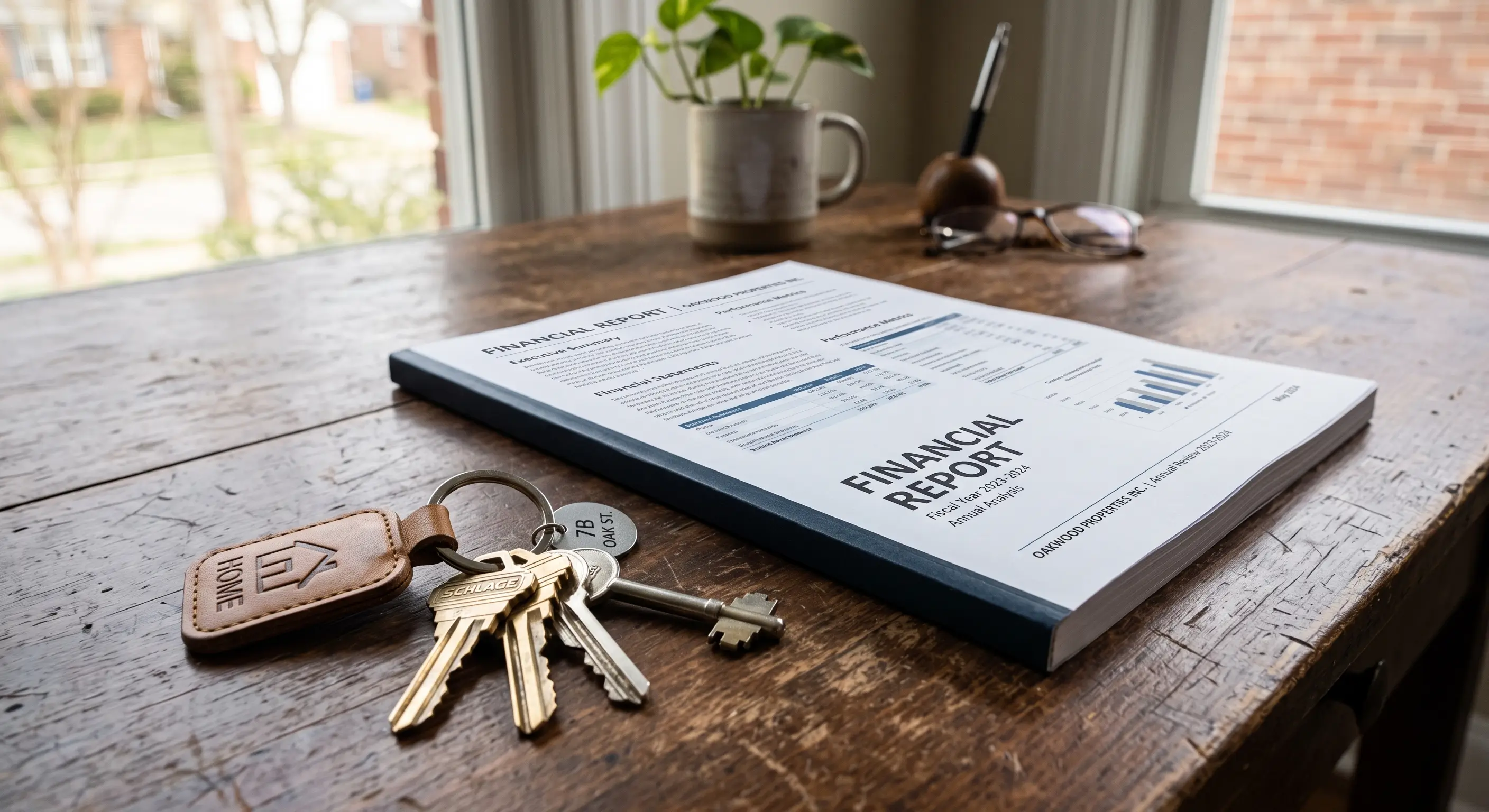
Financial reports rarely lie, but they can hide a lot if you don't know where to look. Property owners who skim their statements every month often miss the warning signs sitting right in front of them, and by the time those signs turn into serious problems, they've already cost real money.
A property management company handles your rent collection, your maintenance budget, and your cash flow every single month. When that relationship works, your reports read clean and your questions get straight answers. When it doesn't, the numbers start telling a different story.
Here are the five red flags to look for in your property management financial reports, and what each one usually means for your investment.
Key Highlights
- Financial reports reveal a lot about how well a property is actually being managed
- Vague charges, missing statements, and mismatched maintenance costs are early warning signs
- Deposit and reserve fund discrepancies carry legal risk beyond simple accounting errors
- Owners who catch these red flags early avoid lost income and costly mistakes down the line
5 Red Flags That You Should Watch For in Your Financial Reports
Most owners only glance at their statements once a month, and that's exactly how small problems turn into expensive ones. Here are the signs that mean your reports deserve a much closer look.
Unexplained or Vague Line Items
Every charge on your statement should be traceable to something real. Vague descriptions like "miscellaneous fee" or "service charge" with no backup are one of the biggest red flags in property management.
Look for these warning signs on your next statement:
- Charges without a matching invoice or work order
- Round-number fees that repeat month after month
- Line items that changed labels without explanation
Property owners deserve financial statements that hold up to scrutiny. If your current property manager can't explain a charge in plain language, that's a problem worth pushing on.
Inconsistent Reporting Dates or Missing Statements
Consistent communication starts with a predictable reporting schedule. Poor property management often shows up first as late reports, skipped months, or statements that arrive whenever someone gets around to it.
A good manager sends reports on a fixed schedule and flags anything unusual before you have to ask. Slow response times on reporting usually point to bigger issues with how the business runs day to day.
Maintenance Costs That Don't Match Work Orders
Maintenance markups are one of the sneakier hidden fees in this industry. Bad property managers sometimes pad repair invoices, use unlicensed vendors, or bill for work that was never actually completed.
Cross-check every maintenance charge against the original request. If tenants report maintenance issues that never show up as work orders, or if repair costs seem high for the local market, ask for itemized invoices going forward.
Security Deposit Discrepancies
Security deposit accounting is one area where legal risk piles up fast. Deposits need to sit in a separate account, get tracked accurately, and get returned or deducted according to local law.
If your reports show deposit balances that don't match your unit count, or deductions with no documentation, that's not a small clerical slip. It's a compliance issue that can expose you to real legal risk.
Reserve Fund or Trust Account Irregularities
Your reserve fund exists to cover the unexpected: a burst pipe, water damage, an emergency repair. When that account runs low without explanation, or when trust accounting practices seem loose, it's time to ask direct questions.
Vague answers or unclear answers about where reserve money went are a serious problem. Professional managers with proven systems can show you exactly where every dollar sits, every time you ask.
JMK Property Management builds financial transparency into every report it sends Miami and Doral owners.
How JMK Property Management Keeps Doral and Miami Owners Protected
Every fee on a JMK statement ties back to a real invoice or work order. Owners get itemized breakdowns instead of vague charges, and questions get answered in plain language, not runaround.
JMK combines local market experience with strict trust accounting practices and consistent reporting schedules, so maintenance costs, leasing fees, and cash flows stay clear every month with no surprise fees waiting to show up later.
Here's what that looks like in practice:
- Maintenance charges link directly to the original work order and vendor invoice
- Leasing fees and management fees are listed separately, never bundled into one unclear total
- Statements arrive on the same schedule every month, without exception
- Security deposits and reserve funds are tracked and reported separately from operating income
- Trust accounting follows Florida's regulatory requirements for property managers
- Owners get a direct line to ask questions instead of routing through layers of staff
Everything Else You Need to Know
Q: How often should owners receive financial reports?
Most professional managers send monthly statements, with year-end summaries for tax purposes. Reports arriving less often, or arriving late, is itself a warning sign.
Q: What's the difference between cash-basis and accrual-basis reporting in property management?
Cash-basis reporting tracks money as it moves in and out. Accrual-basis reporting records income and expenses when they're earned or incurred, even before cash changes hands. Ask your manager which method they use so you can read your reports correctly.
Q: Who regulates trust account handling for property managers?
State real estate commissions typically set the rules for how property managers handle trust and security deposit accounts. Florida property managers must follow Florida Real Estate Commission guidelines for these accounts.
Reading Your Reports With Confidence
Spotting these red flags early protects your property's performance, your tenant relationships, and your bottom line. Poor tenant screening, slow maintenance response, and unclear billing all trace back to the same root cause: a manager who isn't running a tight operation. Owners who catch these signs early avoid lost rent, lost income, and the kind of costly mistakes that push good residents out the door.
Choosing the right property manager isn't about luck. It's about reading the numbers and asking the right questions when something doesn't add up. JMK Property Management gives Miami and Doral owners the transparency and consistent communication needed to make an informed decision about their investment, month after month.
Talk to us today and see what transparent reporting actually looks like.